
So here's a sentence I didn't expect to write today: a bunch of young Nigerians in Abuja just convinced American venture capitalists to hand them approximately $12 million to build autonomous defense systems, and it might be one of the most important tech stories you haven't heard about yet.
Terra Industries, sometimes called Terrahaptix depending on which article you're reading, just closed one of the largest seed rounds in African defense tech history. The round was led by Joe Lonsdale's 8VC, which, if you're not familiar, is the kind of firm that doesn't just throw money at ideas. They threw money at Palantir. They know a thing or two about defense technology.
And they just bet big on Nigeria.
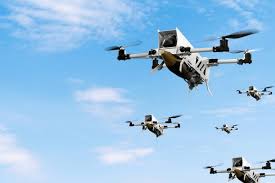
Let me paint you a picture of what Terra actually does, because "defense tech startup" sounds vague and slightly ominous. These folks are building unmanned systems. Long-range drones. Mid-range drones. Autonomous sentry towers that sound like they're straight out of a sci-fi movie. Uncrewed ground vehicles. All designed for security, infrastructure monitoring, and cross-border defense.
Now, before anyone gets worried, we're not talking about some rogue startup building weapons in a garage. According to reports from TechCabal, Techpoint Africa, and other sources covering the round, Terra is focused on surveillance, monitoring, and security applications. Think protecting critical infrastructure, monitoring vast agricultural lands, securing borders in regions where sending human patrols is expensive or dangerous. The kind of stuff that actually matters when you're trying to build a functioning country.
Here's what makes this fascinating though. For years, the narrative around African tech has been pretty consistent: fintech, e-commerce, maybe some agritech if you're feeling adventurous. Software stuff. Apps. Digital payments. All important, don't get me wrong. But defense tech? Hardware? Autonomous systems? That was supposed to be the domain of countries with massive R&D budgets and decades of manufacturing infrastructure.
Terra Industries just walked into that room and said "actually, we're going to do this too."
And you know what the really interesting part is? They're not trying to copy what American or Israeli or Chinese defense companies are doing. They're building for African contexts. Different terrain. Different infrastructure challenges. Different security needs. Different budget constraints. As various tech publications have noted, this isn't about importing solutions. It's about building them from scratch for problems that exist right here, right now.
The fact that 8VC and other U.S. investors are backing this says something significant. It says that someone in Silicon Valley looked at what's happening in African defense innovation and realized this isn't some cute experiment. This is a real market, with real problems, that could produce real returns. And maybe, just maybe, solutions that end up being useful far beyond Africa.
Think about it. If you can build an autonomous sentry system that works in Nigeria, with all the infrastructure challenges and environmental factors and budget constraints that entails, you've probably built something pretty robust. Something that might work in a lot of other places where conditions aren't perfect. Something that doesn't require billion-dollar support systems to function.
There's also something deeply practical about this whole thing. Nigeria has actual security challenges. Vast borders. Critical infrastructure that needs protecting. Agricultural lands that are too large to monitor with traditional methods. These aren't hypothetical problems that might exist in the future. They're Tuesday.
And instead of waiting for someone else to solve them, or importing expensive solutions designed for completely different contexts, Terra is just building the stuff themselves.
Now, I'm not going to pretend this is simple. Defense tech is hard. Hardware is hard. Manufacturing is hard. Doing all of this in a country where the infrastructure isn't optimized for this kind of production is extremely hard. There are regulatory hurdles. There are perception hurdles. There's the whole challenge of building something as complex as autonomous systems with a team that's probably younger than most defense contractors' org charts.
But $12 million in seed funding from serious investors suggests that someone believes they can pull it off. And honestly? The audacity of even trying is worth paying attention to.
This feels like one of those moments where the narrative shifts slightly. Where "African tech" stops being synonymous with just one or two sectors and starts meaning "Africans building technology for whatever problems actually need solving." Mobile money was like that. M-Pesa didn't ask permission to revolutionize financial services. It just did it, because that's what the market needed.
What if defense tech is next? What if the next generation of autonomous systems comes from engineers who learned to build under constraints, who designed for real-world conditions from day one, who never had the luxury of over-engineering because budgets were infinite?
The founders and builders watching this from Nairobi, Cape Town, Accra, or anywhere else should be paying attention. Not because everyone should go build drones, but because Terra Industries just proved something important: there's no category of technology that's off-limits anymore. No sector that's "too advanced" or "too hardware-heavy" or "too capital-intensive" for African founders to tackle.
Someone's going to build the next generation of climate tech. Someone's going to build the next generation of space technology. Someone's going to build solutions for problems we haven't even fully articulated yet. And increasingly, that someone might be operating out of a city that venture capitalists couldn't find on a map five years ago.
So here's my question for you: What's the "defense tech" of your industry? What's the sector everyone assumes is too hard, too capital-intensive, or too entrenched for new players to enter, especially ones building from emerging markets? Because someone in Abuja just raised $12 million to build autonomous defense systems, and if that's possible, what's your excuse?